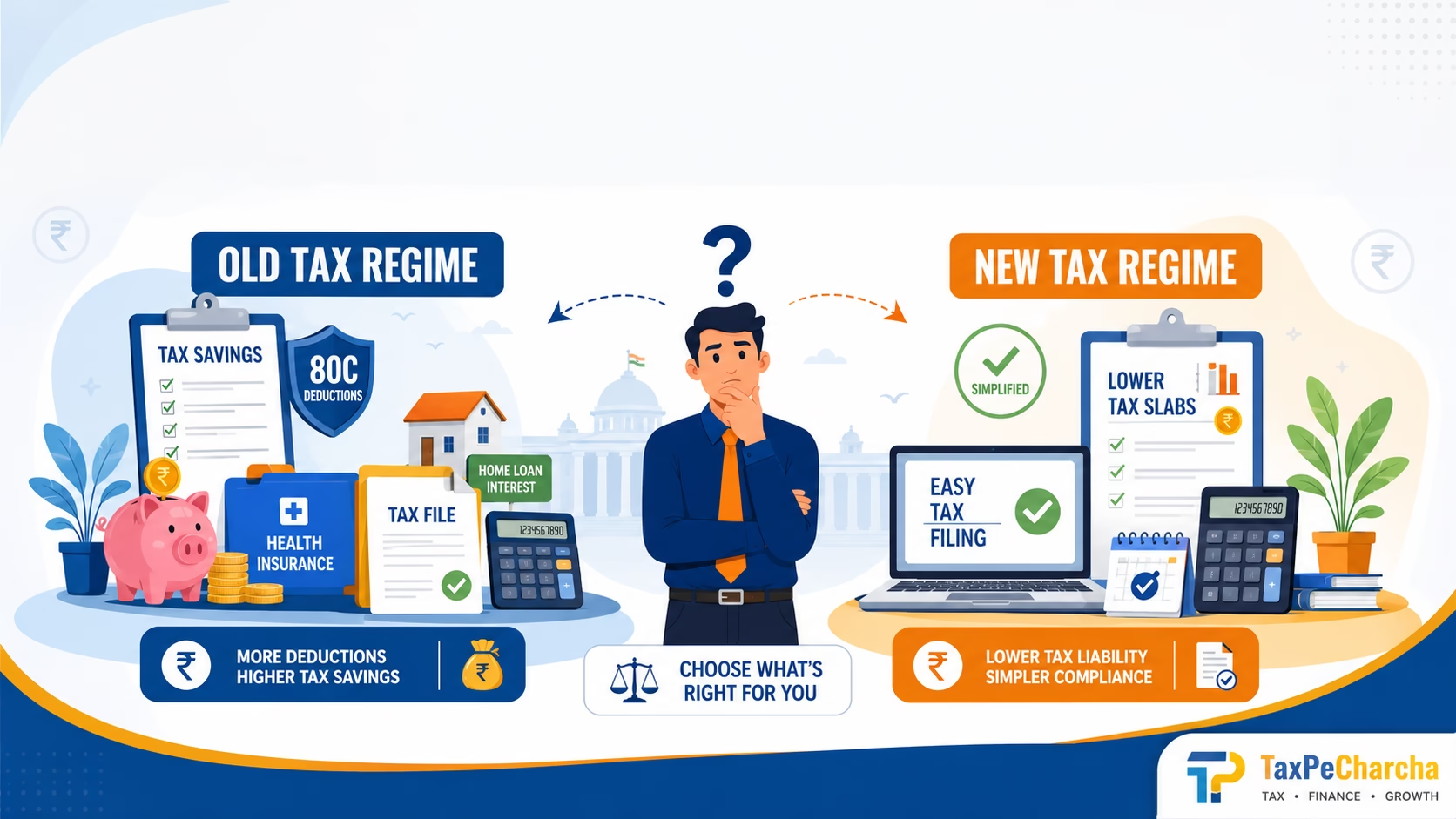
Old Tax Regime vs New Tax Regime FY 2025-26: Which One Saves More Tax?
Introduction
Income Tax Return (ITR) filing season aate hi ek question har taxpayer ke mind mein zarur aata hai —
“Old Tax Regime choose karu ya New Tax Regime?”
Agar galat option select kar diya, to ho sakta hai aap unnecessary tax pay kar dein.
Isi confusion ko door karne ke liye is guide me hum simple Hinglish me samjhenge:
- Old Tax Regime kya hai?
- New Tax Regime kya hai?
- Dono mein difference kya hai?
- Kaun sa option kis taxpayer ke liye better hai?
- Real-life examples ke saath comparison.
Article ke end tak aap confidently decide kar paayenge ki aapke liye kaunsa regime zyada beneficial ho sakta hai.
Old Tax Regime Kya Hai?
Old Tax Regime woh system hai jismein taxpayer ko bahut saari tax deductions aur exemptions milti hain.
Agar aap investments karte hain ya eligible expenses claim karte hain, to taxable income kaafi reduce ho sakti hai.
Common Deductions
- Section 80C
- Section 80D
- HRA
- LTA
- Home Loan Interest
- NPS Contribution
- Education Loan Interest
- Donations (eligible cases)
- Standard Deduction (where applicable)
Is regime mein planning ka role bahut important hota hai.
Agar planning sahi ho, to tax liability kaafi kam ho sakti hai.
New Tax Regime Kya Hai?
New Tax Regime ko tax filing ko simple banane ke purpose se introduce kiya gaya.
Isme taxpayer ko lower tax slab rates milte hain, lekin bahut si deductions aur exemptions available nahi hoti.
Ye regime especially un logon ke liye useful ho sakti hai jo:
- Investments nahi karte
- HRA claim nahi karte
- Home loan nahi hai
- Simple tax filing chahte hain
Aaj ke time mein New Tax Regime default option hai. Agar eligible taxpayer Old Regime choose karna chahta hai, to prescribed process follow karna hota hai.
Old vs New Tax Regime – Quick Comparison
| Feature | Old Tax Regime | New Tax Regime |
|---|---|---|
| Tax Rates | Higher | Lower |
| Deductions | Available | Limited |
| HRA | Yes | Generally No |
| 80C | Yes | No |
| 80D | Yes | No |
| Home Loan Benefits | Yes | Limited |
| Tax Planning | Required | Minimal |
| Suitable For | Investors | Non-investors |
Who Should Choose the Old Tax Regime?
Old Tax Regime generally suits taxpayers who:
- Invest regularly under Section 80C.
- Pay health insurance premiums eligible under Section 80D.
- Claim HRA exemption.
- Have a home loan with eligible tax benefits.
- Want to maximize deductions through tax planning.
Example
Rahul earns ₹12 lakh per year.
He claims:
- 80C investments
- Health insurance
- HRA exemption
- Home loan interest
Because of these deductions, his taxable income reduces significantly.
In many such cases, the Old Tax Regime may result in lower tax than the New Tax Regime.
Who Should Choose the New Tax Regime?
The New Tax Regime may be more suitable for taxpayers who:
- Do not make tax-saving investments.
- Live in their own house without HRA claims.
- Do not have a home loan.
- Prefer a simpler tax filing process with fewer deduction calculations.
Example
Priya earns ₹10 lakh annually.
She:
- Doesn’t invest under Section 80C.
- Doesn’t claim HRA.
- Doesn’t have a home loan.
Instead of making investments only to save tax, she may benefit more from the New Tax Regime because of its lower tax rates and simplified structure.
Common Mistakes Taxpayers Make
Many people choose a tax regime based on friends’ advice or social media posts.
This can be costly because:
- Every taxpayer’s income is different.
- Deductions vary from person to person.
- Salary structure affects tax liability.
- Home loan and investment decisions make a significant difference.
The right tax regime is the one that minimizes your overall tax based on your actual financial situation—not someone else’s.
Latest Income Tax Slabs (FY 2025-26 | AY 2026-27)
New Tax Regime Slabs
| Taxable Income | Tax Rate |
|---|---|
| Up to ₹4,00,000 | Nil |
| ₹4,00,001 – ₹8,00,000 | 5% |
| ₹8,00,001 – ₹12,00,000 | 10% |
| ₹12,00,001 – ₹16,00,000 | 15% |
| ₹16,00,001 – ₹20,00,000 | 20% |
| ₹20,00,001 – ₹24,00,000 | 25% |
| Above ₹24,00,000 | 30% |
Note: The applicable rebate under Section 87A and other conditions should be checked based on the latest Income Tax provisions while filing the return.
How to Decide Which Tax Regime is Better?
Instead of asking,
“Which regime is best?”
Ask yourself these questions:
✅ Do you invest under Section 80C?
If Yes, Old Regime may be worth comparing.
✅ Do you pay Health Insurance Premium?
If yes,
Section 80D deduction may increase Old Regime’s advantage.
✅ Are you paying Home Loan EMI?
Home loan tax benefits can significantly affect your tax calculation.
✅ Do you receive HRA?
If yes,
Old Regime may provide additional tax savings.
✅ Do you prefer simple tax filing?
If yes,
New Regime is often easier because it requires fewer deduction calculations.
Real-Life Example
Example 1
Rohit
Annual Salary: ₹11,50,000
He claims:
- 80C Investment
- Health Insurance
- HRA
- Home Loan Interest
After deductions, his taxable income reduces substantially.
Possible Better Choice: Old Tax Regime
Example 2
Sneha
Annual Salary: ₹11,50,000
No investments.
No home loan.
No HRA benefit.
No major deductions.
Possible Better Choice: New Tax Regime
Common Myths
Myth 1
New Tax Regime is always better.
❌ Wrong.
It depends on your deductions.
Myth 2
Old Regime saves tax for everyone.
❌ Wrong.
Not everyone claims enough deductions.
Myth 3
Everyone should invest only to save tax.
❌ Wrong.
Invest because it aligns with your financial goals—not just to reduce tax.
Mistakes to Avoid
Many taxpayers:
- Select a regime without calculation.
- Ignore eligible deductions.
- Forget to review salary structure.
- Assume the same regime works every year.
- File ITR without comparing both options.
These mistakes can lead to paying more tax than necessary.
Expert Tip
Before filing your ITR:
✔ Compare tax under both regimes.
✔ Check all eligible deductions.
✔ Review your salary components.
✔ Consider future financial goals.
✔ Seek professional advice if you’re unsure.
Even a small comparison can help you save thousands of rupees.
Final Verdict
There is no universal winner between the Old and New Tax Regime.
The best choice depends on:
- Your income
- Your investments
- Your deductions
- Your salary structure
- Your financial goals
That’s why a personalized comparison is always better than guessing.
If you’re confused, don’t worry.
A professional tax review can help you choose the regime that minimizes your tax legally and ensures accurate ITR filing.
Conclusion
Choosing the right tax regime is one of the most important decisions before filing your Income Tax Return.
A few minutes of comparison today can save a significant amount of tax.
Instead of following what others are doing, calculate your own tax liability under both regimes and choose the option that benefits you the most.
If you need help comparing both regimes or filing your ITR, the experts at TaxPeCharcha are here to help.
Frequently Asked Questions (FAQ)
Q1. Which tax regime is better for salaried employees?
It depends on your income, deductions, HRA, home loan, and tax-saving investments. There is no one-size-fits-all answer.
Q2. Can I switch between the Old and New Tax Regime?
The ability to switch depends on the type of taxpayer and the applicable Income Tax rules. Salaried individuals generally have more flexibility than those with business income. Always verify the latest provisions before filing.
Q3. Is the New Tax Regime compulsory?
No. However, the New Tax Regime is the default regime. Eligible taxpayers can choose the Old Regime by following the prescribed process.
Q4. Which regime is better if I have a home loan?
Many taxpayers with eligible home loan benefits find the Old Regime more advantageous, but the outcome depends on the overall tax calculation.
Q5. Should I invest only to save tax?
No. Tax saving is a benefit, but investments should also align with your financial goals, risk profile, and long-term planning.
Q6. Can TaxPeCharcha help me choose the right regime?
Yes. We compare both tax regimes based on your actual income and deductions to help you select the option that minimizes your tax liability legally.